

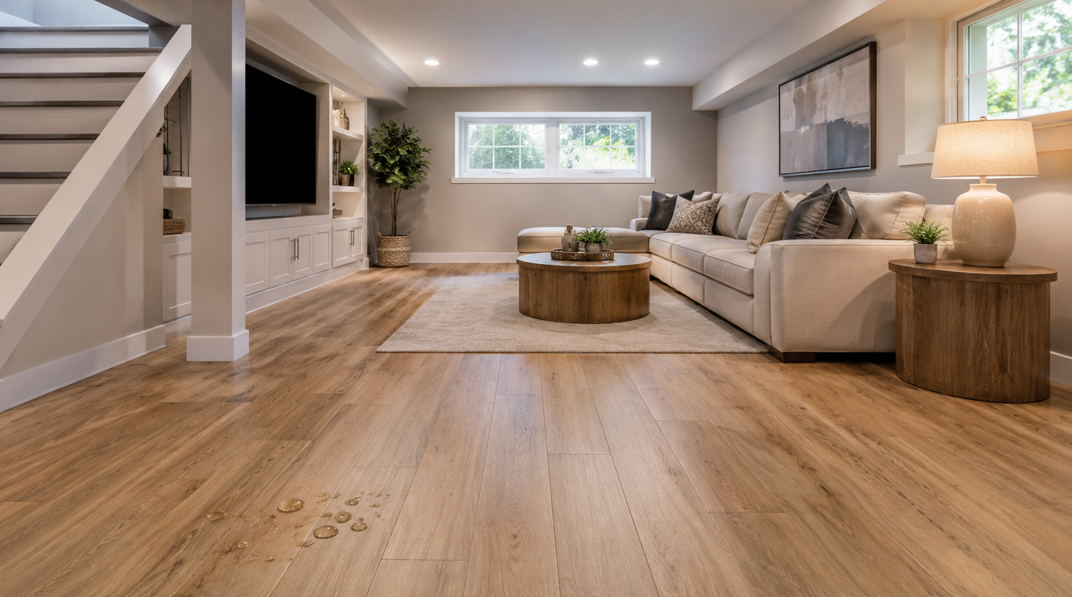
Why Basement Moisture Changes the Flooring Decision
A finished basement can add valuable living space to a Brentwood home. It may become a family room, home office, playroom, guest area, hobby space, or entertainment room. But flooring below grade has to deal with conditions that are different from those on the main level of the house.
Basements can be exposed to higher humidity, condensation, moisture moving through concrete, plumbing leaks, and occasional water intrusion. That does not automatically rule out laminate. It simply means the floor needs to be chosen with the room’s actual conditions in mind.
Modern laminate offers far more moisture protection than many homeowners expect. Depending on the product, features may include denser cores, treated plank edges, tight locking systems, and surface coatings designed to resist everyday spills. These improvements can make laminate a practical option for a dry, properly prepared basement.
For Brentwood homeowners comparing flooring for below-grade spaces, Flooring Galaxy can help make the selection process easier with knowledgeable local guidance and a wide range of flooring options for different household needs.
The key is understanding what the flooring can and cannot do. Moisture-resistant laminate may help with tracked-in rainwater, pet accidents, routine cleaning, and other small spills. It cannot correct an active foundation leak, recurring seepage, or a chronically damp concrete slab.
Before choosing a plank width or wood look, it helps to answer a few practical questions. Is the basement consistently dry? Has it ever flooded? Is the product approved for below-grade installation? What does the manufacturer require for moisture testing, underlayment, and perimeter protection?
Those details matter because a beautiful floor performs best when the product, the room, and the installation system all work together.
Waterproof vs. Water-Resistant Laminate: What Is the Difference?
The terms “water-resistant” and “waterproof” are often used in flooring descriptions, but they are not always interchangeable. Different manufacturers define performance in different ways, so it is worth looking beyond the label on the carton.
What Water-Resistant Laminate Usually Means
Water-resistant laminate is designed to handle limited moisture exposure better than conventional laminate. That might include a spilled drink, damp shoes, a pet accident, or light moisture from everyday cleaning.
The exact level of protection depends on the flooring collection. Some products are designed to resist surface water for a stated period. Others rely on treated edges, protective coatings, or tighter plank joints to reduce the chance of water reaching the core.
That does not mean the floor can remain wet indefinitely. If standing water is left in place, it may eventually work into seams or around the room perimeter.
What “Waterproof” Laminate Can Mean
Some modern laminate products are marketed as waterproof because several moisture-control features work together. These may include highly water-resistant cores, edge treatments, protective top layers, and locking systems designed to limit water movement between planks.
That can be valuable in busy households, especially where occasional spills are part of daily life.
Still, a waterproof flooring claim does not mean the entire basement is protected from flooding. If water enters through a foundation wall, rises through the slab, or comes from a major plumbing failure, the flooring system can still be affected. Baseboards, trim, underlayment, and other building materials may also be at risk.
Why Below-Grade Approval Matters
Basements deserve extra attention because a product that performs well in a bedroom or living room may not automatically be suitable over a concrete slab below grade.
Before buying, review the manufacturer’s installation instructions and warranty. Look for clear guidance on:
Below-grade approval
Concrete moisture testing
Vapor barrier or underlayment requirements
Perimeter sealing or edge treatment
Standing-water limitations
Approved cleaning methods
The most useful rule to remember is simple: moisture-resistant laminate can help manage everyday exposure, but it is not a substitute for correcting an existing basement moisture problem.
Features to Look for in Moisture-Resistant Laminate
Once you know the basement is a reasonable candidate for laminate, compare products by performance as well as appearance. A realistic oak visual may catch your eye first, but the construction underneath matters just as much.
Moisture-Resistant Core Construction
The core gives laminate much of its structure. In moisture-resistant products, manufacturers may use denser materials or treatments intended to reduce the amount of water absorbed by the plank.
That can help limit swelling or edge damage if the floor is exposed to a small amount of moisture. However, a dense core alone does not automatically make a product waterproof.
The manufacturer’s specifications still determine where the flooring can be installed and what type of water exposure is covered.
Tight Locking Systems
A well-designed click-lock system helps the planks fit together closely. Properly connected joints reduce obvious openings where surface moisture might work between boards.
Installation quality matters here. Poorly seated joints, excessive gaps, or incorrect expansion spacing can affect both appearance and long-term performance.
In a basement, correct installation also needs to account for the concrete slab, room transitions, doorways, and the manufacturer’s moisture-control instructions.
Protected Plank Edges
Some laminate collections use treated or sealed plank edges to provide added protection at the seams.
This feature can be useful because plank joints are one of the areas most exposed when a spill occurs. Edge treatments can provide another layer of protection against routine household moisture, but they do not make it sensible to leave standing water on the floor.
Durable Surface Protection
Basement flooring often needs to handle more than humidity. A finished lower level may see children playing, pets running through the room, rolling office chairs, exercise equipment, furniture, and regular entertaining.
A durable wear layer helps protect the visible surface from everyday scuffs, stains, and wear. For a family room, game room, or office, this can be just as important as moisture resistance.
Manufacturer Approval for Basements
This is one of the most important features to confirm.
The flooring manufacturer should clearly state whether the collection is approved for basement or below-grade use. Do not assume that every laminate product is suitable simply because it is marketed as water-resistant.
Homeowners can compare different looks and performance features when exploring laminate flooring for a finished basement.
The right choice is a product that combines the style you want with specifications that match your home.
Prepare the Basement Before New Laminate Goes Down
Even high-quality moisture-resistant laminate needs a suitable installation surface. Basement preparation is one of the most important steps in getting reliable long-term performance.
Look for Existing Water Problems
Before covering the concrete, check whether the basement already shows signs of unwanted moisture.
Possible warning signs include:
Damp or darkened areas on the slab
Water stains along walls or baseboards
Musty smells
White mineral residue on concrete
Cracks that become damp after rain
A history of flooding
Repeated condensation
If water regularly enters the basement, investigate the source before installing new flooring. A flooring product is not designed to serve as a waterproofing system for the building itself.
Check the Concrete Slab
The slab needs to be clean, sound, and flat enough for the flooring system being installed.
Moisture also needs to be considered even when the concrete looks dry. Concrete can hold and release moisture, which is why testing may be required before installation.
There is no single moisture reading that applies to every laminate product. The test results need to be compared with the limits and instructions provided by the flooring manufacturer.
Use the Correct Moisture Barrier or Underlayment
Laminate installed over concrete may require an approved vapor barrier, underlayment, or combined moisture-control product.
The correct option depends on the floor you choose and the installation instructions that come with it.
Underlayment can also help with sound, comfort, and minor subfloor variation, but it needs to be compatible with the laminate system. Adding extra layers that have not been approved can sometimes create installation or warranty problems.
Plan for Expansion Space
Many laminate floors are installed as floating systems. That means the floor needs room to expand and contract as indoor conditions change.
Correct expansion space around walls, columns, doorways, and other fixed objects helps protect the finished installation. Transitions between rooms or different flooring materials also need to be planned carefully.
These details may not be the first thing homeowners think about when shopping, but they can make a major difference in how the floor performs.
Match the Laminate to How You Use the Basement
Once moisture conditions are under control, think about how the basement functions from day to day. The best laminate for a home office may not be the same choice you would make for a playroom or laundry area.
Family Rooms and Recreation Spaces
A basement family room needs to balance comfort, durability, and style.
Wood-look laminate can make a lower-level room feel warmer and more connected to the rest of the home. Natural oak looks, medium wood tones, and subtle grain patterns can work well with a wide range of furniture and wall finishes.
If the room gets regular traffic from children, guests, or pets, pay attention to surface durability as well as moisture resistance.
Home Offices
A basement office can feel polished and permanent with the right laminate floor.
A clean wood visual can create a professional backdrop for desks, shelving, and video calls while still making the room feel comfortable. If you use a rolling office chair, consider floor protection that is approved for the laminate surface.
Area rugs can also add comfort, but make sure any rug pad or backing is suitable for use with the floor.
Playrooms and Pet-Friendly Areas
For a playroom or pet-friendly basement, easy maintenance matters.
Look for laminate with a durable surface and the level of moisture resistance appropriate for everyday spills or pet accidents. A strong wear layer can also help with scuffs caused by toys, claws, and frequent activity.
No laminate is completely scratch-proof, so routine care and sensible furniture protection still matter.
Entertainment Areas
If the basement is used for movies, games, or gatherings, the flooring becomes part of the room’s overall design.
Wide-plank visuals, natural textures, and contemporary wood looks can help create a welcoming atmosphere. Laminate can be especially appealing for homeowners who want the character of hardwood without choosing real wood for every below-grade setting.
Laundry Areas
Laundry rooms deserve more caution because the possible water exposure may be higher.
Washing machines, hoses, utility sinks, and drains can create situations that go beyond a small spill. If you are considering laminate in a basement laundry area, verify that the specific product and warranty support that use.
Where there is a greater chance of substantial water exposure, another waterproof flooring category may be more suitable. The goal is not to force one flooring type into every room, but to choose the material that matches the real conditions.
How to Keep Basement Laminate Looking Its Best
Moisture-resistant flooring still benefits from good everyday habits. Routine care helps the floor stay attractive while supporting the performance the manufacturer intended.
Wipe Up Spills Promptly
Clean up spills when they happen rather than allowing water to remain on the surface.
Even if a product is marketed as waterproof, follow the manufacturer’s guidance about water exposure and cleanup. Waterproof does not mean the floor benefits from standing water.
Keep Humidity Consistent
Basements can feel more humid than the rest of the house, especially during warm, muggy weather in the St. Louis area.
A dehumidifier, suitable ventilation, and a well-maintained HVAC system can help keep indoor conditions more consistent. Stable humidity benefits the room as a whole, not only the flooring.
Use Mats Near Entrances
If people regularly enter the basement from outdoors, a good mat can catch rainwater, dirt, and grit before they reach the flooring.
This is especially useful during wet weather when shoes can track more moisture into the home.
Clean With Flooring-Safe Methods
Laminate does not need to be soaked to get clean.
Use cleaning products and methods approved by the manufacturer. Avoid excessive water and very wet mopping. A lightly damp cleaning approach is usually more appropriate, but the product care guide should always be the final reference.
Keep an Eye on the Basement
A basement that is dry today can develop a new issue later if plumbing, drainage, or foundation conditions change.
Pay attention to new damp spots, unusual smells, leaking appliances, or water marks. Catching a moisture problem early can help protect the flooring and the rest of the finished space.
When Laminate Is a Good Basement Choice
Laminate can be a strong option for many Brentwood basements when the room and the product are a good match.
It may be worth considering when:
The basement is dry and has no unresolved water intrusion
The selected laminate is approved for below-grade installation
You want a realistic hardwood appearance
Everyday spills are a greater concern than flooding
The room is used as a family space, office, guest room, or recreation area
The correct moisture-control system can be installed beneath the floor
In these conditions, modern moisture-resistant laminate can offer a stylish finish with practical everyday performance.
When Another Flooring Option May Make More Sense
A different flooring material may be worth comparing if:
The basement has a history of flooding
Water regularly enters through the slab or foundation
The space includes appliances or plumbing with significant leak risk
The laminate manufacturer does not approve the product for below-grade use
You want flooring specifically designed for environments with greater moisture exposure
Luxury vinyl and other waterproof flooring options may be better suited to some of these situations.
That does not make laminate a poor choice. It simply reinforces an important point: the best basement floor is the one that matches the actual conditions of the room.
Find the Right Laminate for Your Brentwood Basement
A basement floor has to do more than look good. It needs to suit the environment, the way your household uses the space, and the installation requirements of the product.
For Brentwood homeowners, moisture-resistant laminate can be a beautiful and practical choice when the basement is dry, properly prepared, and matched with a product approved for below-grade installation.
Focus on the details that matter most: core construction, locking systems, protected edges, surface durability, moisture-control requirements, and warranty terms. Once those boxes are checked, you can choose the wood look, plank style, and finish that make the basement feel like a natural extension of your home.
Flooring Galaxy combines knowledgeable service, flooring experience, product selection, and professional installation support to help homeowners make confident decisions about their floors.
If you are planning new flooring for a Brentwood basement and want help comparing suitable options, get in touch with the Flooring Galaxy team.


