

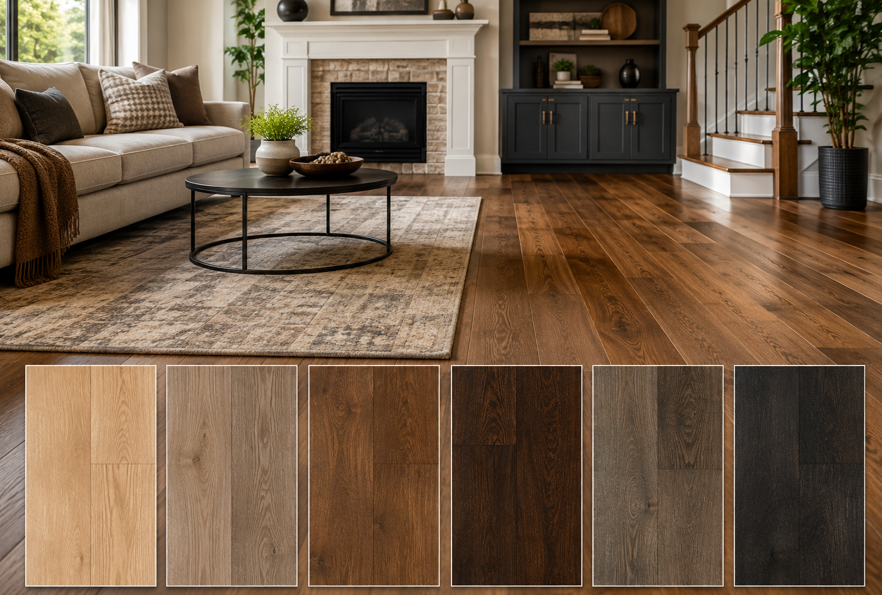
Warm, Natural Hardwood Is Leading the Look in 2026
Hardwood flooring can shape the entire feel of a room, and stain color plays a major role in that transformation. A light natural finish can make a space feel open and relaxed, while a medium brown can bring warmth and definition. Darker stains can create a more dramatic look, particularly when paired with lighter walls and cabinetry.
For Arnold homeowners planning a flooring update in 2026, the strongest design direction is moving toward warmer, more natural wood tones. Natural oak looks, honey and wheat-inspired shades, warm medium browns, and softer greige finishes are appearing more often, while the cool gray flooring that dominated previous years has become less prominent.
That shift gives homeowners plenty of flexibility. Warm flooring works comfortably with white kitchens, earthy paint colors, natural stone, black accents, and many of the softer neutral palettes used in current interiors.
At Flooring Galaxy, Arnold homeowners can compare hardwood options with knowledgeable local guidance and consider how different colors could work with the lighting, furnishings, cabinetry, and overall character of their home.
One important point to remember is that stain samples are only a starting point. The same stain can look noticeably different on red oak, white oak, maple, or another species. Existing floor age, sanding, grain variation, lighting, and the finishing system can also influence the final appearance.
That is why choosing the best stain is less about chasing one fashionable color and more about finding a shade that works naturally with the wood and the rest of the home.
1. Natural and Almost-Natural Wood Tones
One of the most noticeable hardwood trends in 2026 is also one of the simplest: letting the wood look like wood.
Natural and nearly natural floors use either no pigmented stain or a very lightly tinted treatment that keeps the grain, variation, and original character highly visible. Current flooring trend coverage consistently points to natural white oak and warm, understated wood tones as leading choices in 2026.
Why Natural Floors Work So Well
Natural-looking hardwood creates a bright, relaxed foundation without locking the room into a strong color direction.
It can pair particularly well with:
White or cream cabinetry
Soft green and earthy paint colors
Black fixtures and hardware
Natural stone countertops
Warm neutral furnishings
Modern and transitional interiors
Natural looks can also help show the grain and variation homeowners chose real hardwood for in the first place.
Best Wood Species for the Look
White oak is particularly popular for natural and lightly finished looks because its underlying color tends to be more neutral than red oak.
Red oak has stronger pink or reddish undertones. Leaving it completely natural can produce a warmer appearance, which may be exactly what some homeowners want.
The lesson is simple: do not choose “natural” based solely on a photo. See how the actual species responds before deciding.
2. Warm Honey and Wheat Tones
Warm does not have to mean orange.
The newer generation of honey-inspired hardwood colors is generally softer and more restrained than the strongly golden finishes many people associate with previous decades. Think wheat, light caramel, toasted oak, and gentle honey rather than intense yellow-orange.
Warm natural oak, honey, and wheat shades are prominent in 2026 flooring trend reporting as homeowners move away from colder gray palettes and toward more inviting, nature-inspired interiors.
Where These Colors Work Best
Honey and wheat tones can be especially appealing in rooms that need a little warmth.
They work comfortably with:
Off-white walls
Navy or muted green cabinetry
Beige and cream upholstery
Brass or bronze accents
Natural textiles
Traditional wood furniture
They can also be useful in spaces that receive cooler natural light because the warmth of the floor helps keep the room from feeling flat.
Keep the Undertone Controlled
There is a difference between pleasantly warm hardwood and flooring that reads strongly orange.
Homeowners who like this trend may want to compare several samples and pay attention to how each responds to afternoon sunlight and artificial lighting.
A subtle wheat or honey stain can feel current while still having enough classic character to work through future decorating changes.
3. Provincial and Classic Medium Browns
If you want something warmer than natural oak but less dramatic than dark walnut, medium brown is one of the safest places to start.
Classic medium-brown stains have stayed popular because they complement a wide range of decorating styles. Provincial-style browns, chestnut tones, medium brown, and similar shades can add richness without making the room feel particularly dark.
Warm medium browns remain a strong 2026 direction, with current flooring professionals highlighting shades in the walnut, chestnut, Provincial, and similar warm-brown families.
Why Medium Browns Are So Versatile
A medium stain creates enough contrast to define the floor while still allowing much of the wood grain to remain visible.
These tones can work with:
White kitchens
Traditional stained cabinetry
Warm beige interiors
Contemporary neutral furniture
Farmhouse-inspired spaces
Transitional homes
They can also be forgiving from a maintenance standpoint because everyday dust or minor surface marks may be less noticeable than they are on very dark flooring.
A Strong Choice for Existing Red Oak
Many existing hardwood floors are red oak. Warm medium browns can work particularly well when refinishing these floors because they can coordinate naturally with the wood's underlying warmth.
The precise result still depends on the stain formula and existing floor, so testing remains important.
4. Special Walnut and Soft Walnut Tones
Walnut-inspired stains offer a slightly richer look without reaching the intensity of the darkest brown finishes.
These colors typically sit between medium and dark, making them useful for homeowners who want visible warmth and contrast but still want the room to feel approachable.
Soft walnut shades pair well with neutral walls, creamy whites, black fixtures, and natural textures. They can also work nicely in open layouts because they provide enough color to anchor the space without dominating it.
When Walnut Works Particularly Well
Consider a walnut-inspired stain when:
Your room has plenty of natural light
You want stronger contrast with white walls
Your furniture includes lighter upholstery
You prefer a traditional or transitional look
You want something deeper than natural oak without choosing an espresso tone
Walnut families can vary considerably between manufacturers, so the name alone does not guarantee the final color.
One brand's “Special Walnut” may look different from another manufacturer's walnut-toned option, and the wood underneath changes the result again.
5. Warm Greige and Weathered Oak Looks
Gray flooring is not completely gone in 2026, but the direction has changed.
Rather than cool, silvery gray floors, current preferences are moving toward warmer greige shades that mix gray with beige or natural brown. These colors provide a muted appearance without making a room feel cold. Current stain trend guides describe warm greige as a stronger contemporary choice while cooler full-gray treatments continue to fade.
Why Greige Still Has a Place
Warm greige works well for homeowners who like understated color but do not want a strongly golden or brown floor.
It can coordinate with:
Taupe walls
Warm white cabinetry
Stone fireplaces
Black or brushed metal accents
Contemporary furnishings
Transitional interiors
Weathered-oak-inspired colors can also soften prominent red or yellow tones, depending on the wood species and stain combination.
Avoid Choosing Gray by Habit
If you already have cool gray floors elsewhere in the home, coordinating with them may make sense.
For a completely new design, however, compare gray options against warmer greiges and natural browns before deciding. The warmer alternatives may give you more flexibility as furniture and paint colors change over time.
6. Rich Chestnut and Brown Tones
Chestnut offers another way to bring warmth into hardwood without going extremely dark.
These stains tend to have more depth than natural oak while retaining an earthy quality that suits both classic and updated interiors. In 2026, richer brown and chestnut-inspired colors fit comfortably within the broader return to warm, grounded flooring palettes.
Chestnut can look particularly attractive with creamy walls, muted greens, warm stone, leather furniture, and natural fabrics.
It can also provide a useful middle ground for homeowners who think pale flooring feels too light but find ebony or espresso too dramatic.
When shopping for hardwood flooring, compare medium and rich brown samples directly against the materials already in your Arnold home. Cabinet doors, trim samples, paint colors, and even a sofa cushion can help reveal which undertones work together.
7. Dark Walnut and Espresso for a Dramatic Look
Dark hardwood can still create an impressive interior in 2026. It simply requires a little more consideration than lighter and medium-toned floors.
Dark walnut, espresso, antique brown, and similar stains can add depth and formality. They work especially well when the rest of the room provides enough contrast.
Pair Dark Floors With Lighter Elements
Dark flooring can look striking with:
White or cream walls
Light upholstery
Pale countertops
Large windows
Lighter rugs
Warm metallic accents
In a smaller room with limited daylight, a very dark stain can make the floor feel visually heavier. That is not necessarily a problem if the goal is a rich, intimate atmosphere, but it is worth considering before committing.
Think About Everyday Visibility
Very dark floors tend to make dust, pet hair, footprints, and small surface marks more noticeable. Current 2026 stain guidance frequently notes this practical trade-off when comparing dark floors with natural or medium shades.
If you love the depth of dark walnut but want easier everyday upkeep, consider stepping slightly lighter into a rich medium brown.
8. Custom-Blended Stains for a More Personal Finish
Sometimes none of the standard stain colors delivers exactly the right result.
Custom blending allows a flooring professional to combine tones to create something between two standard choices. A homeowner might want to soften the red in an existing oak floor, warm up a greige, or create a medium brown that complements existing cabinetry more precisely.
This approach can be especially useful when refinishing existing hardwood because the wood already has its own color and history.
Custom Does Not Have to Mean Trendy
The best custom blends are not necessarily unusual.
Often, the goal is simply to create a balanced tone that works better with the specific floor. A small adjustment can make the stain feel more natural alongside cabinets, trim, furniture, and connected rooms.
For Arnold homeowners considering hardwood refinishing, comparing several sample combinations on the actual floor can provide a much clearer picture than selecting from a printed chart alone.
How Red Oak and White Oak Change the Stain Color
One of the biggest mistakes in choosing a hardwood stain is assuming the stain color controls the entire result.
It does not.
The species underneath matters tremendously.
Red Oak
Red oak naturally contains warmer pink, reddish, or amber undertones. A light stain may allow more of that warmth to remain visible.
Medium browns can deepen and balance those undertones, while certain cooler or neutralizing treatments may reduce their visual impact.
White Oak
White oak generally has more beige, tan, and neutral undertones. That makes it especially compatible with the natural, wheat, greige, and lightly stained looks popular in 2026.
The Same Stain Can Look Different
A stain labelled medium brown may appear warmer on red oak and more neutral on white oak.
That is why online photographs and small sample boards are useful for inspiration, but they cannot guarantee the finished result in your home.
Current professional guidance recommends testing stain on the actual floor because species, grain, sanding, sealer, topcoat, and lighting can all influence the final appearance.
Test Stain Samples in the Actual Room
Never underestimate lighting.
A stain that looks neutral under showroom lighting can appear warmer near a sunny window. A rich brown may look dramatically deeper in a room with limited daylight.
Whenever possible, evaluate stain samples:
Beside the room's wall color
Near kitchen or bathroom cabinetry
Next to existing trim
In morning daylight
In afternoon sunlight
Under the home's artificial lighting
From adjoining rooms
Give yourself time to look at the options throughout the day rather than making the decision after seeing them once.
Flooring is one of the largest surfaces in a room, so even a small undertone becomes more noticeable once the color extends across hundreds of square feet.
Remember That Stain Color and Floor Protection Are Different Decisions
Stain primarily changes the appearance of hardwood. The protective finish or topcoat plays the larger role in protecting the wood surface from everyday wear.
That distinction matters because homeowners sometimes assume a darker stain creates a tougher floor. It does not automatically make hardwood more durable.
A current professional stain guide makes the same distinction, noting that stain color is primarily cosmetic while the finish protects the surface.
When refinishing hardwood, talk about both decisions:
What color do you want?
What finishing system is appropriate for the floor and household?
A family with children and pets may have different performance priorities from a homeowner refinishing a formal dining room.
The goal is to combine the visual result you want with a finish system suitable for how the floor is actually used.
Match the Stain to the Rest of Your Arnold Home
A beautiful stain can still feel wrong if it fights with the surrounding materials.
Before settling on a color, look at the permanent features around the flooring.
Consider:
Kitchen cabinets
Interior doors
Baseboards and trim
Fireplace materials
Countertops
Stair components
Existing hardwood in connected spaces
You do not have to match every wood tone exactly. In many cases, intentional contrast works better.
Light cabinets can pair with medium or dark flooring. Walnut cabinetry can stand out against natural white oak. Painted cabinets give homeowners even more freedom to select the floor based on countertops, walls, and furniture.
What matters most is avoiding undertones that appear unintentionally disconnected.
Which Hardwood Stain Is Best for Your Home?
There is no single winner for every Arnold home, but a few simple guidelines can narrow the choice.
Choose natural or lightly stained hardwood if you want a bright, relaxed appearance and plenty of decorating flexibility.
Choose honey or wheat tones if you want inviting warmth without a heavily stained look.
Choose medium brown or Provincial-inspired stains if you prefer classic color, visible grain, and broad versatility.
Choose walnut or chestnut tones if you want more depth without making the floor extremely dark.
Choose warm greige if you like muted contemporary interiors but want something softer than traditional cool gray.
Choose dark walnut or espresso if you want strong contrast and are comfortable with the additional visibility of dust and everyday marks.
Most importantly, choose based on your actual wood, lighting, and surroundings rather than the stain name alone.
Give Your Arnold Hardwood Floors the Right Color for 2026
The best hardwood stains for 2026 share a common direction: warmth, natural character, and colors that let real wood remain the focus.
Natural oak, wheat, warm honey, medium brown, walnut, chestnut, and warm greige all offer ways to update a home without making the floor feel tied to a short-lived trend. Dark stains still have their place for homeowners who prefer a richer, more dramatic interior.
For an existing hardwood floor, refinishing can provide an opportunity to change the appearance without replacing flooring that is still suitable for renewal. For a new installation, considering stain direction early can make it easier to coordinate the floor with cabinets, paint, furniture, and adjoining spaces.
Flooring Galaxy serves Arnold homeowners from its showroom at 2120 Tenbrook Rd, Arnold, MO 63010, and its experienced team can help compare hardwood options, color direction, and refinishing considerations.
If you are deciding on a stain for existing hardwood or planning a new floor for your Arnold home, get in touch with the Flooring Galaxy team for personalized guidance.


