

Sustainable Flooring in 2026 Is About More Than One Material
Homeowners in St. Peters are asking more questions about where flooring comes from, how long it will last, what goes into the finish, and whether a product can be renewed instead of replaced. That has made sustainability a bigger part of flooring decisions in 2026.
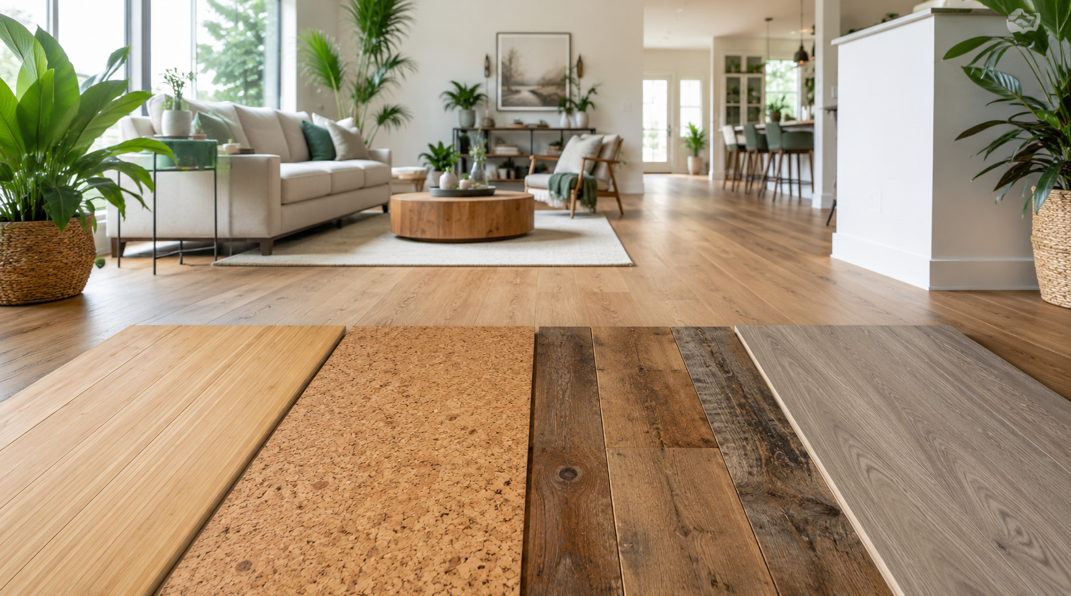
The trend is not limited to one “green” material. Current 2026 flooring coverage points to reclaimed wood, responsibly sourced hardwood, bamboo, cork, low-VOC finishes, and engineered wood as part of the broader move toward more environmentally conscious interiors.
At Flooring Galaxy, St. Peters homeowners can compare flooring based on appearance, performance, room conditions, and long-term value rather than relying on a single sustainability label.
The most useful way to think about eco-friendly flooring is to look at the entire product. Where did the material come from? How much of it is renewable or reclaimed? What certifications support the environmental claims? How durable is it? Can it be repaired or refinished? What type of finish, adhesive, or underlayment is required?
A floor that lasts for decades and can be renewed may offer a very different long-term story from one that needs to be replaced after a shorter service life. Sustainability is therefore less about finding one perfect material and more about choosing a floor whose sourcing, construction, performance, and maintenance fit your priorities.
1. FSC-Certified Hardwood for Responsible Sourcing
One of the most direct ways to stay with real hardwood while paying closer attention to sourcing is to look for FSC-certified products.
The Forest Stewardship Council, or FSC, sets standards for responsible forest management and offers certification that can apply to flooring, including plank flooring, parquet, and engineered flooring. FSC also maintains supplier resources for homeowners and building professionals looking for certified wood products.
Why This Option Appeals to Hardwood Buyers
FSC-certified hardwood lets homeowners keep many of the qualities they already like about real wood:
Natural grain and variation
A wide range of species and colors
Long service potential
Repair and refinishing possibilities, depending on construction
Compatibility with traditional, transitional, and modern interiors
The difference is that the sourcing claim is supported by a recognized certification system rather than a vague marketing phrase.
What to Check Before Buying
Certification applies to specific products and supply chains, not every floor sold by a manufacturer. Look for the actual FSC label or documentation associated with the product you are considering.
Also remember that responsible sourcing is only one part of the decision. Finish chemistry, transportation, installation materials, expected lifespan, and maintenance all contribute to the overall environmental picture.
For St. Peters homeowners who want genuine hardwood without moving into a completely different flooring category, certified wood can be one of the easiest places to begin.
2. Reclaimed Hardwood for Character and Material Reuse
Reclaimed hardwood is one of the most visually distinctive sustainable flooring directions in 2026.
Instead of harvesting new material for every plank, reclaimed flooring gives existing wood another life. Depending on the source, boards may come from older buildings, barns, industrial structures, or other deconstructed materials that can be cleaned, remilled, and prepared for a new installation.
Current 2026 flooring trend coverage continues to highlight reclaimed wood as a sustainability-focused option because it combines material reuse with the unique appearance homeowners increasingly want.
Why Reclaimed Floors Stand Out
Reclaimed hardwood often carries visible character that new flooring tries to reproduce through manufacturing.
That may include:
Nail marks
Saw marks
Color variation
Knots
Weathering
Patina
Irregular grain
For homeowners who want a floor with history and personality, those details can be part of the appeal rather than imperfections to hide.
What to Ask About
Reclaimed does not automatically mean ready for installation. Ask how the material was sourced, cleaned, milled, graded, and prepared. Also find out whether the boards are solid or engineered, how consistent the thickness is, and what finish system will be used.
A professional assessment is especially useful with reclaimed material because its age and previous use can create more variation than newly manufactured hardwood.
3. Engineered Hardwood for Efficient Use of Real Wood
Engineered hardwood deserves a place in the sustainability conversation because it uses real hardwood on the surface while relying on a layered construction underneath.
That construction can make more efficient use of premium hardwood material than a full-thickness solid plank, depending on the product. It can also provide greater dimensional stability in rooms where seasonal movement or subfloor conditions make solid hardwood less practical.
Current 2026 trend reporting notes that wide-plank looks continue to favor engineered wood, while sustainability discussions increasingly include responsibly sourced engineered hardwood alongside solid wood.
When comparing hardwood flooring, it is worth looking at both solid and engineered constructions rather than assuming one format is automatically better.
Wear Layer Matters
Not every engineered floor can be refinished to the same extent. The thickness of the real-wood wear layer influences how much future sanding or renewal may be possible.
If long service life is part of your sustainability goal, ask whether the product can be refinished and how the manufacturer describes its expected maintenance.
Look at the Whole Product
Because engineered hardwood includes adhesives and composite layers, indoor-air-quality certification can be useful when comparing products. FloorScore certification, for example, is available for engineered hardwood and evaluates finished flooring for specified VOC emissions.
This makes engineered hardwood a good example of why “eco-friendly” should be evaluated across sourcing, construction, emissions, durability, and expected lifespan rather than from one feature alone.
4. Bamboo for a Hardwood-Like Look From a Fast-Growing Material
Bamboo is technically a grass rather than hardwood, but it remains one of the best-known alternatives for homeowners who want a wood-inspired floor made from a rapidly renewable plant.
In 2026, bamboo continues to appear in sustainable flooring trend coverage alongside reclaimed wood and cork.
Why Bamboo Gets Attention
Bamboo grows much faster than the trees used for conventional hardwood flooring. That rapid growth is one reason it is frequently discussed as an alternative for environmentally conscious projects.
Modern bamboo flooring is also available in a range of colors and constructions, from lighter natural looks to deeper tones designed to resemble traditional wood floors.
Performance Varies
Bamboo should not be judged as a single product type. Manufacturing method, density, finish quality, and construction can all affect performance.
Strand-woven bamboo, for example, is constructed differently from traditional horizontal or vertical bamboo flooring. Homeowners should compare the actual product warranty, hardness or wear information, water limitations, and installation requirements.
Check Emissions and Certifications
Bamboo flooring often uses adhesives during manufacturing, so product-level emissions information matters.
FloorScore includes bamboo flooring among the categories eligible for its indoor-air-quality certification. Certified products are tested against specified VOC emissions criteria rather than relying only on a “natural” material claim.
For a St. Peters household that likes a clean wood look but wants to explore a fast-growing raw material, bamboo can be worth comparing with conventional hardwood and engineered wood.
5. Cork for Comfort, Quiet, and Renewable Appeal
Cork offers a very different look and feel from hardwood, but it continues to appear in 2026 sustainable flooring trend discussions.
Cork flooring is made from cork material harvested from the bark of cork oak trees. Unlike conventional lumber harvesting, the bark can be removed while the tree remains alive and continues growing.
Current flooring trend coverage highlights cork for its renewable character, softer feel, and sound-absorbing qualities.
Where Cork Can Make Sense
Cork may appeal in:
Home offices
Bedrooms
Reading rooms
Playrooms
Upper-level spaces where sound reduction matters
Its slightly cushioned feel can be noticeably different from the firmness of hardwood or laminate.
Cork Is Not a Hardwood Substitute in Every Room
Homeowners should compare moisture limits, wear performance, finish requirements, and manufacturer-approved installation areas before treating cork as a universal hardwood replacement.
A busy entryway may have different demands from a quiet office. A kitchen may need a different level of water protection from a bedroom.
6. Existing Hardwood Refinishing as a Sustainable Alternative to Replacement
One of the most practical eco-conscious flooring choices may already be installed in your home.
If an existing hardwood floor is structurally sound and has enough usable wood remaining, refinishing can restore its appearance without replacing the entire floor.
That approach can reduce the amount of new flooring material required while keeping the character of the home intact.
When Refinishing Can Be Worth Exploring
Refinishing may make sense when the floor has:
Surface scratches
Worn finish
Dull traffic areas
An outdated stain color
Minor discoloration
General wear without widespread structural damage
It can also allow homeowners to update the floor toward the warmer natural, medium-brown, or lower-sheen looks that are popular in 2026 without starting over with completely new material.
When Replacement May Still Be Better
Refinishing is not suitable for every floor. Extensive water damage, structural problems, deep board damage, previous sanding, or a very thin engineered wear layer can limit what is possible.
The important point is to have the floor assessed before assuming replacement is the only path.
For an eco-conscious homeowner, extending the useful life of an existing hardwood floor can be just as meaningful as selecting a new material marketed as sustainable.
7. Low-VOC Finishes, Adhesives, and Underlayments
Sustainable flooring is not only about the visible plank.
Finishes, adhesives, and underlayments can also affect the environmental and indoor-air-quality profile of a project.
The U.S. EPA's Indoor airPLUS guidance places emphasis on low-emitting hard-surface flooring and installation materials, while FloorScore evaluates hard-surface flooring, adhesives, and underlayments for specified VOC emissions.
Why VOC Information Matters
Volatile organic compounds, or VOCs, can be emitted by certain building products. That does not mean every floor or adhesive presents the same issue.
Third-party certification gives homeowners a more useful way to compare products because it is based on defined testing criteria.
FloorScore certification can apply to solid hardwood, engineered hardwood, bamboo, cork, laminate, adhesives, and underlayments.
Ask Product-Specific Questions
When sustainability and indoor air quality are priorities, ask:
Does the finished flooring carry a recognized emissions certification?
What finish is applied at the factory or on site?
Does the installation require adhesive?
Are low-emitting adhesive options available?
What underlayment is specified?
Are product emissions documents available?
These questions help separate measurable product information from general environmental marketing.
8. How to Compare Eco-Friendly Flooring Claims
One of the challenges with sustainable flooring is that many products use broad terms such as “green,” “natural,” “responsible,” or “eco-friendly.”
Those words can be useful starting points, but they are not all certifications.
A more reliable comparison looks for evidence.
Responsible Sourcing
For wood-based flooring, certification such as FSC can provide information about responsible forest sourcing. FSC certification specifically applies to flooring and other wood products.
Reclaimed or Recycled Content
Ask what percentage of the product is reclaimed or recycled and whether the manufacturer documents that claim.
Indoor Emissions
Look for recognized third-party emissions certifications where appropriate, such as FloorScore.
Durability
A floor that performs well for a long time may reduce the need for frequent replacement. Compare warranties, wear performance, repair options, and refinishing potential.
Maintenance
Consider what cleaners, coatings, or maintenance treatments the floor requires over time.
End-of-Life Possibilities
Some materials may be reusable, recyclable, biodegradable, or easier to repurpose than others, but those possibilities depend heavily on product construction and local facilities.
The goal is not to find a floor with the most environmental buzzwords. It is to understand which claims are specific, documented, and relevant to your project.
Which Sustainable Flooring Option Fits Your St. Peters Home?
The right choice depends on what sustainability means to you and what the room requires.
Choose FSC-certified hardwood if you want real wood with documented responsible sourcing.
Consider reclaimed hardwood if material reuse and one-of-a-kind character are high priorities.
Explore engineered hardwood if you want a real-wood surface with dimensional stability and potentially more efficient use of premium hardwood.
Look at bamboo if a rapidly renewable plant-based material and a wood-inspired appearance appeal to you.
Consider cork for rooms where softness, quiet, and renewable sourcing are important.
Explore refinishing existing hardwood if the floor you already own can be renewed instead of removed.
Also pay attention to low-emitting finishes, adhesives, and underlayments regardless of which flooring material you select.
For many homeowners, the best solution may combine several of these ideas. An FSC-certified engineered wood with a low-emitting finish, for example, addresses different sustainability priorities than reclaimed solid wood or cork.
Style Trends Still Matter in Sustainable Flooring
Choosing environmentally conscious flooring does not mean giving up current design.
In 2026, sustainable materials are showing up alongside many of the year's larger flooring trends: warm natural tones, earthy neutrals, wide planks, visible grain, matte finishes, and materials that feel less artificial. Current industry coverage specifically connects reclaimed wood, responsibly sourced hardwood, cork, and bamboo with the broader move toward natural materials.
Make Sustainability Part of the Whole Flooring Decision
Sustainable flooring in 2026 is less about chasing one perfect material and more about making a series of informed choices.
Responsible sourcing matters. So does material reuse. Renewable content can matter, but so can durability, repairability, indoor emissions, installation materials, and the ability to keep a floor in service for many years.
For St. Peters homeowners who love the character of wood, there are several directions worth exploring. Certified hardwood keeps the experience close to traditional wood flooring. Reclaimed hardwood gives existing material another life. Engineered hardwood offers real-wood beauty in a different construction. Bamboo and cork broaden the conversation beyond conventional hardwood, while refinishing may allow you to keep the floor already in your home.
Flooring Galaxy serves St. Peters homeowners from its showroom at 250 Mid Rivers Center, St. Peters, MO 63376, with knowledgeable guidance and a range of flooring options for different styles, budgets, and household needs.
If you are comparing hardwood with more sustainable flooring options for an upcoming project, get in touch with the Flooring Galaxy team to discuss what fits your St. Peters home best.


