

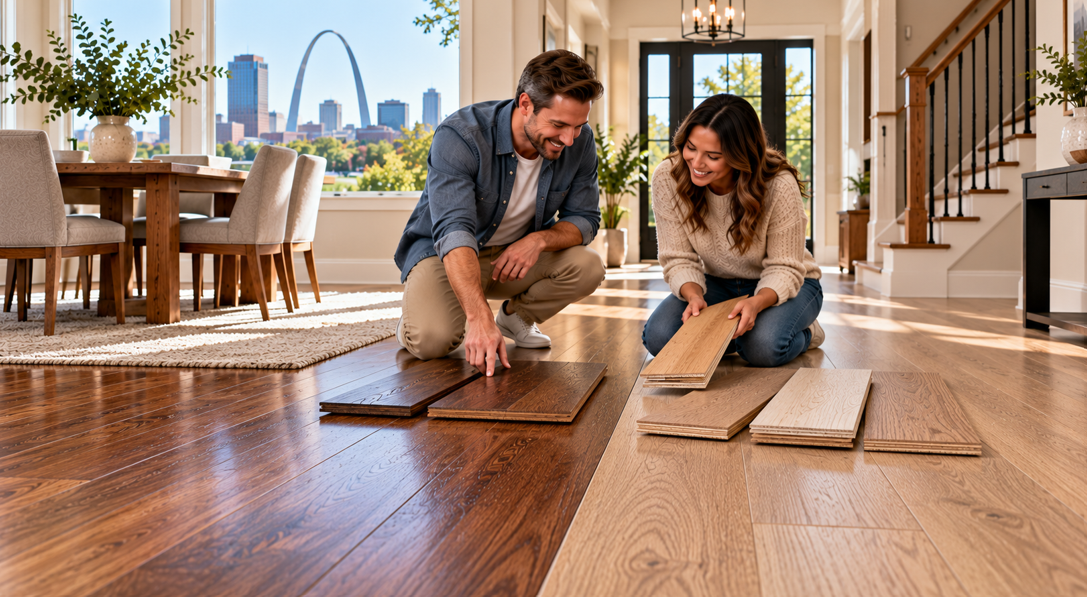
St. Louis is a city of beautiful homes, from the brick bungalows of South City and the grand houses of the Central West End to mid-century ranches in the suburbs. Many of these homes already have hardwood, and many more are ready for it. When homeowners begin shopping, one question comes up again and again: is solid or engineered hardwood the better choice? At Flooring Galaxy, our family-owned team has helped St. Louis homeowners make this decision for over a decade, and this guide breaks down the differences so you can choose with confidence.
What Is Solid Hardwood?
Solid hardwood is milled from a single piece of wood, typically about three quarters of an inch thick. It is the classic flooring found in many older St. Louis homes.
Benefits of solid hardwood:
Refinishing potential. Solid boards can be sanded and refinished many times over their life.
Authentic character. Many homeowners love knowing their floor is one piece of real wood.
Matches original floors. In older homes, solid hardwood is often the best way to blend new boards with existing floors.
Considerations:
Solid wood expands and contracts more with humidity changes.
It is not recommended for basements or direct installation over concrete.
It is usually nailed down over a wood subfloor.
What Is Engineered Hardwood?
Engineered hardwood has a real wood top layer bonded to a core of cross-layered plywood or high-density fiberboard. The layered construction makes it much more stable.
Benefits of engineered hardwood:
Stability. Engineered planks resist swelling and shrinking during humid St. Louis summers and dry winters.
Versatile installation. It can be nailed, glued or floated, and many products work over concrete.
Basement friendly. It is suitable for finished lower levels, which are common across the region.
Wide plank options. Its stability makes wide planks a safer choice.
Considerations:
Refinishing potential depends on the thickness of the wear layer.
Quality varies, so choosing a reputable product matters.
Comparing Them for St. Louis Homes
Older Brick Homes
Many St. Louis homes built in the early and mid twentieth century have original solid oak floors. If you are adding hardwood to match existing floors or replacing damaged sections, solid hardwood is usually the best match. Flooring Galaxy also offers hardwood refinishing and repairs, so we can blend new and old boards and refinish the whole floor for a consistent look.
Basements
Most St. Louis homes have basements, and many families finish them as rec rooms or guest spaces. Solid hardwood is not suited to below-grade installation, while engineered hardwood can bring real wood warmth to these spaces.
Humidity Swings
Missouri summers are hot and humid, and winters are dry once the furnace kicks on. Engineered hardwood handles these swings with less movement, making it a strong choice for homes without whole-home humidity control.
Main and Upper Floors
On main and upper levels with a wood subfloor, both options perform well. If you value long-term refinishing potential, solid hardwood is a great investment.
You can compare solid and engineered options in our full range of hardwood flooring online.
Cost Considerations
Solid and engineered hardwood can be similar in price, depending on species, grade, width and finish. Engineered floors with thick wear layers and wide planks may cost more, while some solid oak options offer excellent value. Installation costs vary too: floating engineered floors can install faster, while nail-down solid floors require more labor. Flooring Galaxy believes in fair pricing every day rather than so-called sales, and we offer free financing.
Style Trends in St. Louis
Popular choices in 2026 include natural white oak, warm honey tones that suit historic homes and wide planks for open floor plans. Matte finishes and wire-brushed textures are in demand because they hide scratches and footprints. For historic homes, traditional red oak in a classic stain remains a timeless choice.
Caring for Either Floor
Care is the same for both. Sweep or vacuum regularly, use a damp microfiber mop with a hardwood cleaner and keep indoor humidity between about 35 and 55 percent. Place mats at every entry to catch winter salt, and add felt pads under furniture.
Which Is Right for Your Home?
Choose solid hardwood for main and upper floors over a wood subfloor, especially in older homes where you want to match existing floors or maximize refinishing potential.
Choose engineered hardwood for basements, rooms over concrete and homes where humidity changes are a concern.
Many St. Louis homeowners use both: solid upstairs and engineered below grade.
Professional Installation and Services
Flooring Galaxy offers professional installation, measuring, delivery, furniture removal and disposal of old flooring. Our team has over 100 years of combined experience, so your hardwood is in good hands.
Signs Your Existing Floors Can Be Saved
Before replacing old hardwood, check whether it can be refinished. Floors with surface scratches, dull finish or minor stains often look new again after sanding and refinishing. Boards with deep water damage, soft spots or severe cupping may need replacement. Our team can inspect your floor and recommend refinishing, repair or replacement, whichever gives you the best result.
Questions to Ask Before You Buy
Ask about the wear layer thickness of engineered products, the recommended humidity range, whether the product is approved for below-grade installation and what the warranty covers. Clear answers help you compare products fairly and choose a floor that will look great for decades in your home. We are glad to bring samples to your home so you can see how each option looks with your trim and furniture.
Visit a Showroom
Visit our Brentwood showroom at 2645 S Hanley Rd, our Arnold showroom on Tenbrook Rd or our St Peters showroom at Mid Rivers Center. Prefer to stay home? Our mobile showroom brings samples to your door. Contact our team to compare solid and engineered hardwood for your St. Louis home.


