

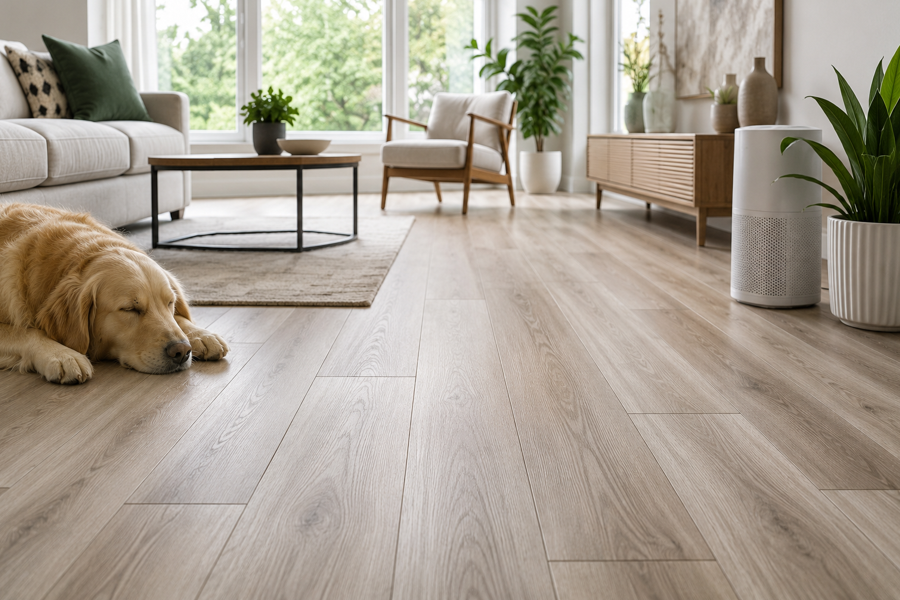
Choosing flooring for an allergy-conscious home is about more than color, plank width, or matching the cabinets. For many St. Peters homeowners, it also means thinking about how easily a floor can be cleaned, what gets tracked indoors, and whether the surface fits into a practical routine for managing dust, pollen, and pet dander.
No flooring material can make a home completely free of allergens. Still, a smooth hard surface can be easier to keep clean than flooring with deep fibers where debris can settle. The Asthma and Allergy Foundation of America recommends solid-surface flooring where possible as part of reducing dust-mite exposure, along with regular cleaning, washable furnishings, and humidity control.
That makes laminate worth considering. Today’s laminate combines wood-inspired style with a durable, easy-to-maintain surface that works well in many busy rooms. For homeowners who want to compare options in person, Flooring Galaxy serves the greater St. Louis area with locations in St. Peters, Brentwood, and Arnold, plus in-store and shop-at-home options.
The key is choosing laminate for the right reasons. Rather than treating it as a medical solution, think of it as one part of a cleaner, more manageable indoor environment. Here’s what to look for.
What “Allergy-Friendly Flooring” Really Means
The phrase “allergy-friendly” can be useful, but it needs some context. Laminate does not prevent allergies, remove allergens from the air, or replace the advice of a medical professional. What it can do is give homeowners a smooth surface that supports regular cleaning.
Floors Collect What Life Brings Indoors
Dust, pollen, pet dander, crumbs, hair, and everyday debris eventually settle somewhere. Floors are one of the largest surfaces in a home, so keeping them clean can make a meaningful difference to the overall housekeeping routine.
In St. Peters, that can be especially relevant during seasons when doors and windows are opening more often, kids are moving in and out of the house, or pets are carrying outdoor debris back inside. The goal is not to create a sealed-off home. It’s to make routine cleanup straightforward.
Smooth Surfaces Are Easier to Access
One advantage of hard-surface flooring is simple visibility. Dust and pet hair that land on the floor can usually be seen and removed rather than becoming buried within a thick pile.
The Asthma and Allergy Foundation of America specifically notes that dust mites favor wall-to-wall carpeting and other fabrics that are difficult to wash, and it recommends solid-surface flooring when possible. It also recommends weekly HEPA-filter vacuuming as one part of dust-mite control.
That doesn’t mean laminate stays clean on its own. It means the surface can work well with a consistent cleaning routine.
Why Laminate Can Work Well in Busy St. Peters Homes
For allergy-conscious households, cleanability matters. But flooring still has to work for real life. Laminate can be appealing because it brings together practical maintenance, durable construction, and a wide range of looks.
A Practical Surface for Routine Cleaning
Laminate is generally designed with a finished wear layer over a decorative layer and core. That finished surface gives homeowners a floor that can be swept, vacuumed, and cleaned according to the manufacturer’s care directions.
For a household with children, pets, or frequent visitors, that can make everyday upkeep feel more manageable. Hair, crumbs, and tracked-in debris are easier to spot when they’re sitting on a smooth surface.
Style Without a Clinical Feel
Choosing flooring with allergies in mind does not mean choosing a room that feels plain or sterile. Modern laminate comes in visuals that imitate oak, maple, walnut, and other wood looks, with colors ranging from pale neutrals to deeper traditional tones.
That matters because flooring covers so much visual space. A well-chosen laminate can help a living room feel warmer, make a home office look more polished, or give an open-concept space a consistent foundation without sacrificing practical maintenance.
Durability for Everyday Traffic
A floor in a guest bedroom faces very different wear from one in a hallway used by the whole family. Laminate is available in products designed for different levels of residential use, so durability needs to be matched to the room rather than assumed.
For busy homes, ask how the product handles foot traffic, pets, furniture movement, and frequent cleaning. The right fit is a floor that looks good and performs well in the way the household actually lives.
What to Look for When Choosing Laminate
Not every laminate product is built the same way, and not every home has the same priorities. If allergies or indoor air quality are part of the decision, it helps to compare more than the sample color.
Review Product Emissions Information
Indoor air quality is influenced by many sources, including building materials, furnishings, household products, humidity, ventilation, and outdoor air. The U.S. Environmental Protection Agency notes that formaldehyde is found in some composite wood products and building materials and that exposure can cause irritation of the skin, eyes, nose, and throat.
That is not a reason to assume laminate is unsafe. It is a reason to ask informed questions.
When comparing products, look for available manufacturer information about emissions, applicable standards, and third-party certifications. If a label uses terms such as “low-emitting” or “indoor-air-quality certified,” find out what standard or program supports that claim.
Think About Surface Texture
A heavily textured plank can create a beautiful, realistic wood look. A smoother finish may be quicker to wipe clean. Neither is automatically better.
Think about your household. If pet hair is a daily reality, or you prefer fast cleaning several times a week, run your hand over samples and compare how much texture is built into the surface. The best choice balances appearance with the maintenance routine you’re comfortable keeping.
Check Moisture Performance
Some laminate collections offer strong water resistance, while other products are intended for drier areas. “Laminate” does not automatically mean “waterproof,” and product warranties can vary.
Before choosing a floor for a kitchen, entryway, basement, or another area where moisture may be a concern, check the specific manufacturer’s guidance. A knowledgeable flooring professional can help explain the difference between water-resistant and waterproof claims and where each product is designed to perform.
When you compare laminate flooring, look at the complete product: cleanability, surface texture, moisture performance, durability, warranty, and the room where it will be installed.
Match Durability to the Room
Bedrooms, home offices, living rooms, hallways, and dining areas all place different demands on a floor. Consider foot traffic, pets, rolling chairs, direct access to outdoors, and how often furniture is moved.
A beautiful floor is more satisfying when its performance level fits the space from the start.
Where Laminate Makes Sense Around the Home
Laminate can work in many rooms, but an allergy-conscious flooring plan is more useful when it reflects how each space is actually used.
Living Rooms
Living rooms tend to collect a little of everything: dust, pet hair, snack crumbs, and debris carried in from other parts of the house. A smooth laminate surface can make regular sweeping or vacuuming straightforward.
If you like the softness of an area rug, consider choosing one that can be cleaned regularly and using it as an accent rather than relying on textile flooring wall to wall. That gives you warmth underfoot while keeping more of the room easy to access for routine floor cleaning.
Bedrooms
Bedrooms deserve special attention because people spend long periods of time there. If you prefer a solid-surface floor instead of wall-to-wall carpet, laminate can create a warm, residential look while remaining easy to sweep or vacuum.
The rest of the room still matters. Bedding, upholstered headboards, curtains, throw blankets, and other fabrics can collect dust, so flooring works best as part of a broader cleaning routine rather than as a standalone answer.
Home Offices
A home office needs to look professional while standing up to desk chairs, foot traffic, and long workdays. Laminate can give the space a finished wood look without requiring a high-maintenance cleaning routine.
If you use a rolling office chair, check the flooring manufacturer’s recommendations for chair mats, casters, and surface protection.
Dining Areas and Hallways
Dining rooms and hallways are practical places to appreciate a surface that cleans up quickly. Crumbs, pet hair, and tracked-in dirt are part of daily life, especially in active households.
Choose a product suited to the expected traffic and follow the care instructions when cleaning. That combination matters more than simply choosing a floor because it is labeled laminate.
Moisture-Prone Spaces
Bathrooms, basements, laundry areas, and some entries call for extra care when choosing flooring. Product specifications vary widely.
If a room has a history of moisture, address the source first and confirm that the flooring product is approved for that environment. Moisture control protects far more than the floor itself.
How to Keep Laminate Cleaner When Allergens Are a Concern
The most allergy-conscious floor can only help if it is maintained consistently. The good news is that the routine does not need to be elaborate.
Vacuum or Sweep Regularly
Remove dust, hair, pollen, and debris before it builds up. A vacuum designed for hard surfaces can be especially useful in homes with pets or in rooms where dust tends to gather around baseboards and furniture.
The Asthma and Allergy Foundation of America recommends using a vacuum with a HEPA filter weekly as part of dust-mite management. For someone with a significant dust-mite allergy, the organization also notes that cleaning itself can stir up dust, so individual medical guidance may matter.
Use the Right Cleaning Method
Follow the flooring manufacturer’s care instructions. Laminate products can have different requirements, and using too much water or an unsuitable cleaner can affect the finish or warranty.
A lightly damp cleaning method may be appropriate for many products, but the product instructions are the authority. Clean visible spills promptly, especially around plank edges.
Control What Comes Through the Door
Entry mats can capture some of the dirt and debris that would otherwise travel farther into the home. Some households also prefer a no-shoes routine indoors.
If you have pets, wiping paws after outdoor time can reduce the amount of mud, pollen, and debris carried across the floor. It is a small habit that can make regular cleaning easier.
Keep Indoor Moisture in Check
Moisture management matters for the entire home. The Centers for Disease Control and Prevention recommends keeping indoor humidity no higher than 50% to help prevent mold growth, along with fixing leaks and addressing wet areas promptly.
Flooring cannot compensate for a moisture problem. If you notice recurring dampness, condensation, or leaks, deal with that source before focusing on cosmetic flooring changes.
Remember the Rest of the Room
Dust does not only land on the floor. Upholstery, bedding, curtains, shelves, HVAC filters, ceiling fans, and washable rugs all play a role in the indoor environment.
A cleaner floor is most useful when it fits into a broader routine that also includes ventilation, filtration, moisture control, and regular cleaning of fabrics and surfaces. EPA guidance likewise identifies building materials, furnishings, moisture, humidity, outdoor air, and building systems among the factors that can affect indoor air quality.
How to Compare Laminate in Person
Online photos are useful for narrowing down style, but flooring is easier to judge when you can see and touch it.
Look at the Sample From Different Angles
A plank can look different under showroom lights, natural daylight, and warm indoor lighting. Compare tone, grain pattern, sheen, and texture.
If you are trying to create a calmer, brighter room, a lighter wood look may help. If you want contrast with pale walls and cabinets, a medium or deeper tone may feel more grounded. These are design choices, not allergy choices, but both need to work together.
Ask Practical Questions
Bring a short list of questions to the showroom:
Is this product approved for the room I’m renovating?
What does the manufacturer recommend for routine cleaning?
How does the surface handle pets and high traffic?
What moisture protection does the product provide?
What warranty applies to residential use?
Is emissions or indoor-air-quality information available?
Are there installation requirements I need to plan for?
These questions help you compare performance rather than choosing on appearance alone.
Use Local Expertise
Flooring Galaxy’s St. Peters showroom is located at 250 Mid Rivers Center, St Peters, MO 63376. The company also offers shop-at-home service for homeowners who would rather compare samples in their own space. Its current website lists St. Peters as one of three greater St. Louis locations and provides both showroom and in-home shopping options.
Seeing samples in the room where they will be installed can be especially useful because wall color, cabinets, daylight, and furniture all influence how flooring looks.
A Cleaner, More Comfortable Home Starts With the Right Fit
Laminate can be a smart option for St. Peters homeowners who want a smooth, attractive floor that fits into an allergy-conscious cleaning routine. Its value comes from practical cleanability, broad style choices, and products designed for different levels of everyday use.
The key is to keep expectations realistic. Laminate does not create an allergen-free home, and flooring is only one part of indoor air quality. Cleaning habits, humidity, ventilation, filters, pets, fabrics, and moisture control all matter too.
When you shop, compare the actual features of individual products. Look at cleanability, texture, moisture performance, durability, warranty, emissions information, and whether the floor is recommended for the room you have in mind.
A knowledgeable local team can make that comparison easier. If you are ready to explore laminate options for your St. Peters home, get in touch with Flooring Galaxy for personalized guidance and help finding a floor that suits your style, household, and everyday routine.


