

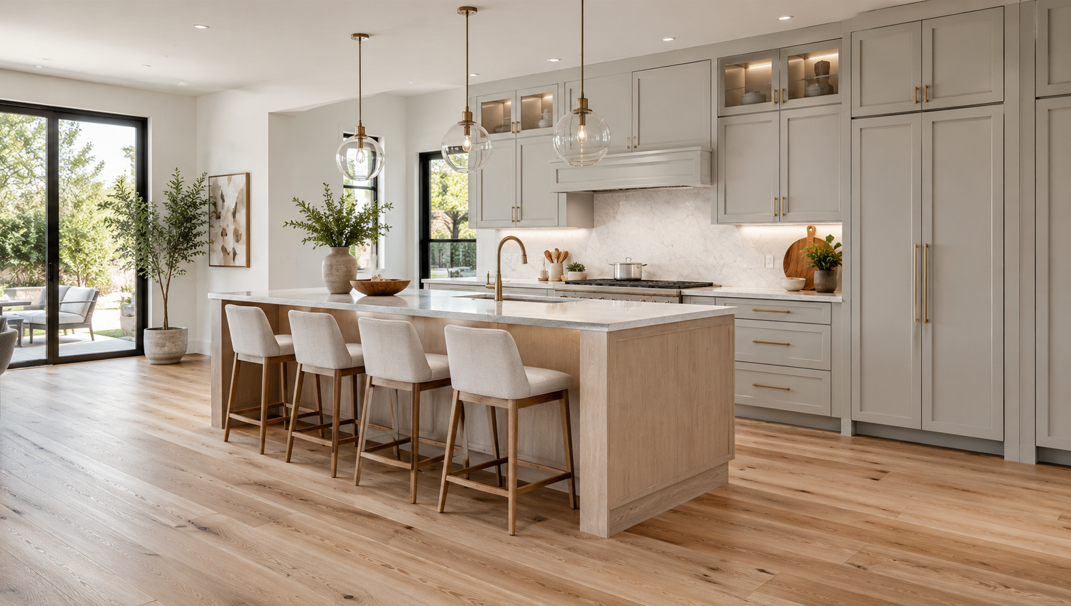
Build the Kitchen Around a Clear Color Story
A modern kitchen works best when the cabinets and flooring feel connected rather than chosen separately. In Brentwood homes, that often means balancing clean cabinet lines with hardwood that brings warmth, texture, and character to the room.
There is no single “correct” cabinet-and-floor combination. White cabinets can work with pale oak or deeper brown flooring. Natural wood cabinets can pair beautifully with contrasting hardwood. Black or charcoal cabinets can look striking over lighter floors. What matters most is how the undertones, grain, finish, and contrast work together.
At Flooring Galaxy, Brentwood homeowners can compare flooring styles while thinking about the cabinets, countertops, backsplash, wall color, and lighting already in the space.
If you are updating an existing kitchen, start with the materials that are staying. If the entire room is changing, create a simple palette before making final selections. Pick the main cabinet direction, identify the countertop tone, and then use the flooring to support or intentionally contrast those choices.
The goal is not to make every wood surface match. In fact, cabinets and floors that are almost identical can make a kitchen feel flat. A better approach is to coordinate undertones, create enough contrast to define each surface, and decide which element will carry the most visual character.
Start With Undertones, Not Just Color
Two wood finishes can both be called “brown” and still look wrong together. The reason is usually the undertone.
Warm undertones often include golden, honey, red, or orange notes. Cooler finishes may lean gray, taupe, or slightly blue. Neutral woods fall somewhere between the two and often coordinate easily with several cabinet colors.
Before choosing hardwood, look closely at the cabinetry in natural daylight. Ask whether it reads warm, cool, or neutral. Then compare flooring samples directly beside it whenever possible.
Warm Cabinets With Warm or Neutral Hardwood
Honey oak, warm maple, cherry, and rich walnut cabinets often pair naturally with hardwood that has warm or balanced undertones.
The floor does not need to duplicate the cabinets. A medium brown hardwood with gentle golden notes can work with warm cabinetry as long as there is enough difference in depth or grain to keep the surfaces distinct.
Neutral Hardwood for a Flexible Palette
Neutral wood tones can be especially helpful when a kitchen already contains several finishes.
For example, white cabinets, a warm wood island, brushed metal hardware, and a stone countertop with both beige and gray movement can all be connected by a natural oak or balanced medium-brown floor.
Cooler Cabinets With Balanced Flooring
Gray, charcoal, or blue-gray cabinets can work with cooler or neutral hardwood. However, an extremely gray floor may limit future paint and cabinet choices.
A balanced natural wood tone often gives the kitchen more flexibility while still complementing cooler cabinetry.
Use Contrast to Make the Design Feel Intentional
Contrast is one of the simplest ways to create a polished kitchen. If the cabinets and floor are nearly the same shade, the room can lose definition. A visible difference allows each material to stand on its own.
White Cabinets With Hardwood Floors
White cabinets are highly flexible.
Light natural oak can create an airy, modern look, especially in smaller kitchens or rooms with limited daylight. Medium brown hardwood adds warmth and definition. A darker floor creates stronger contrast and a more dramatic result.
For a clean contemporary feel, a natural or lightly stained wood can soften the crisp cabinetry without making the room feel heavy.
Black or Charcoal Cabinets With Lighter Hardwood
Dark cabinetry makes a strong statement. Pairing it with lighter hardwood can keep the lower half of the room from feeling too heavy.
Pale oak, natural maple, or a softly warm wood finish can create a balanced contrast. If you prefer dark cabinets with darker flooring, use lighter countertops, walls, backsplash, or generous natural light to maintain visual openness.
Natural Wood Cabinets With Contrasting Wood Floors
Wood cabinets and hardwood floors can absolutely work together. The key is not trying to make them identical.
Light oak cabinets may work with a slightly deeper or more neutral floor. Rich walnut cabinets can contrast beautifully with lighter oak. If the cabinetry has a strong grain pattern, consider a quieter floor so the two materials do not compete.
Match the Floor to the Cabinet Style
Cabinet color matters, but the door style also affects the overall look. Modern kitchens often use clean lines, simple hardware, and fewer decorative details, giving hardwood an opportunity to add natural texture.
Flat-Panel Cabinets
Flat-panel or slab cabinets have a streamlined appearance. Hardwood with visible but controlled grain can add depth without making the kitchen feel traditional.
Wider planks can work particularly well because fewer visible seams create a calmer floor pattern.
Shaker Cabinets
Shaker cabinets can move easily between classic and modern design. They work with many hardwood looks, from clean natural oak to deeper brown finishes.
For a more contemporary result, combine simple Shaker cabinetry with understated grain and a matte or low-sheen floor.
Two-Tone Cabinetry
Two-tone kitchens may combine white perimeter cabinets with a wood island, or painted cabinets with a dark contrasting island.
When cabinetry already introduces two strong colors, the floor works best as a unifying element. Look for a tone that relates to both finishes rather than adding a third competing color.
A medium natural oak, for example, can connect white cabinetry with a walnut-toned island without trying to copy either finish exactly.
Bring Countertops and Backsplashes Into the Decision
Cabinets and flooring are never viewed in isolation. Countertops and backsplashes sit between them visually, so they can connect the palette or make competing undertones more noticeable.
If the countertop has dramatic veining or several colors, a quieter hardwood finish can keep the kitchen balanced. If the countertop is simple, the floor can carry more grain and variation.
White quartz offers broad flexibility because it works with many wood tones. Warmer stone surfaces may feel more cohesive with hardwood that shares similar warmth, while cooler gray or white surfaces often pair well with neutral woods.
The backsplash deserves the same attention. A bold patterned backsplash already introduces visual movement, so a calmer floor may keep the room from looking crowded.
When comparing hardwood flooring, bring cabinet, countertop, paint, and backsplash samples together whenever possible. Seeing the materials side by side can reveal undertone differences that are easy to miss when each finish is selected separately.
Check the Flooring in Your Actual Kitchen Lighting
Lighting can completely change how hardwood appears.
A sample that looks beige or neutral under showroom lights may look warmer in direct sun. A rich brown floor can appear much darker in a kitchen with limited daylight. Artificial light can also emphasize yellow, red, gray, or neutral undertones.
Before making a final decision, view samples:
In morning and afternoon light
Directly beside the cabinets
Next to the countertop
Under the kitchen’s main artificial lighting
From nearby living or dining areas
If your kitchen is part of an open floor plan, look at the sample from several viewpoints. The floor needs to work with more than the cabinetry immediately beside it.
This simple step can prevent a common design disappointment: choosing a beautiful sample that changes character once it is installed across the entire room.
Do Not Try to Match Wood Exactly
Trying to find hardwood that perfectly matches wood cabinets is usually less effective than coordinating them.
Different species, stains, finishes, and grain patterns reflect light differently. Even samples that look close may appear less alike when one covers the floor and the other fills an entire wall of cabinetry.
Instead, choose woods with compatible undertones and create an intentional difference in color depth or grain.
Useful starting points include:
Light oak cabinets with medium neutral oak flooring
Walnut cabinets with lighter natural hardwood
Warm maple cabinets with balanced medium-brown flooring
Painted cabinets with hardwood chosen around the countertop and room palette
This approach gives each material its own identity and can make future decorating changes easier.
Consider Plank Width, Grain, and Sheen
Color gets most of the attention, but plank width, wood character, and surface sheen can change the overall feel of a modern kitchen.
Plank Width
Wide planks can create a cleaner, more expansive appearance because there are fewer seams across the room. They often complement modern cabinetry and open layouts.
Narrower planks create more visual rhythm and can be a good fit when you want a more classic hardwood character.
Grain and Natural Character
Some homeowners prefer a calm, consistent floor with limited variation. Others want more visible grain, knots, and natural character.
If your cabinets already display strong wood grain, a quieter floor can provide balance. With painted or minimalist cabinets, a more expressive hardwood can become a key design feature.
Surface Sheen
Matte and low-sheen finishes can create a soft, natural appearance that suits many contemporary interiors. Highly glossy finishes reflect more light and create a different visual effect.
Rather than choosing sheen by trend alone, consider the specific product, your preferred look, and how the kitchen is used every day.
Make Everyday Kitchen Performance Part of the Choice
A kitchen floor has to perform as well as it looks.
Foot traffic, chairs, pets, food preparation, dropped items, and occasional spills all place demands on hardwood. When comparing products, consider the finish, care requirements, and suitability for your household.
Clean spills promptly, especially around sinks, dishwashers, refrigerators, and pet bowls. Use furniture pads under stools, tables, and movable furniture to reduce unnecessary surface wear. Regular sweeping or vacuuming helps keep grit from being dragged across the finish.
If the kitchen connects directly to an outdoor entrance, think about how much dirt and moisture will be tracked inside. A suitable entrance mat can help protect the floor, provided the mat or backing is compatible with the flooring manufacturer’s care recommendations.
Good maintenance does not need to feel complicated. A few consistent habits help hardwood retain its beauty while letting the kitchen function as a real working space.
Decide Whether the Kitchen Should Flow Into Nearby Rooms
Many Brentwood kitchens connect directly to dining and living areas. In that setting, flooring continuity can have a major visual impact.
Using the same hardwood through the kitchen and adjoining spaces can make the home feel larger and more connected. It also avoids unnecessary transitions between flooring materials.
If existing hardwood is already installed nearby, decide whether the kitchen floor can coordinate with it. Matching an older floor exactly may not always be realistic because wood can change in appearance over time, and the original product may no longer be available.
A deliberately complementary floor can look better than a near-match that is noticeably different.
If the kitchen is visually separated from nearby rooms, you have more freedom to introduce another hardwood look. Even then, maintaining a connection through undertone, warmth, or overall design style helps the home feel cohesive.
Cabinet and Hardwood Pairings Worth Considering
There are countless workable combinations, but these pairings offer useful starting points for a modern Brentwood kitchen.
White Cabinets + Natural Oak
This combination feels bright, clean, and adaptable. Natural oak adds warmth while white cabinetry keeps the room feeling open.
Walnut Cabinets + Light Oak
The contrast lets rich cabinetry stand out without making the room feel dark. It can work especially well with simple countertops and restrained hardware.
Black Cabinets + Warm Natural Hardwood
Natural hardwood softens the boldness of black cabinetry. The combination can feel contemporary without becoming stark.
Soft Green Cabinets + Medium Oak
Muted green has an organic quality that pairs naturally with medium wood tones. Balanced undertones keep the result calm and inviting.
Navy Cabinets + Neutral Hardwood
Deep blue cabinetry can work beautifully with neutral oak or balanced medium-brown hardwood. The wood introduces enough warmth to keep the room residential and welcoming.
Natural Oak Cabinets + Deeper Brown Hardwood
Two wood finishes can create attractive depth when the tones are clearly different but still related. Keep one grain pattern more restrained so the surfaces do not compete.
Treat these combinations as inspiration rather than fixed rules. Your room size, lighting, countertops, and personal style still guide the final choice.
Bring the Whole Kitchen Together Before You Decide
The strongest kitchen designs are chosen as a complete palette.
Instead of asking only, “Does this floor match my cabinets?” ask whether it works with the cabinets, countertop, backsplash, wall color, hardware, lighting, and adjoining rooms.
Collect samples and compare them together. Look at them at different times of day. Step back and decide which surface you want to carry the most visual character.
If the cabinetry is bold, let the hardwood provide balance. If the cabinets are simple and neutral, the flooring can bring more personality. If both surfaces are wood, use intentional contrast rather than chasing an exact match.
A well-designed kitchen does not need every finish to be the same color. It needs each material to feel like it belongs in the same space.
Find the Right Hardwood for Your Brentwood Kitchen
Matching hardwood with modern kitchen cabinets comes down to a few reliable principles: understand undertones, use intentional contrast, consider the entire room palette, and choose a floor that fits everyday kitchen life.
White, black, natural wood, navy, gray, and muted green cabinets can all work beautifully with hardwood when the tones are selected carefully. Plank width, grain, sheen, countertops, and lighting add the finishing layers that make the design feel complete.
Flooring Galaxy can help Brentwood homeowners compare hardwood styles and see how different options relate to the finishes they already have in mind. Whether you are refreshing an existing kitchen or planning a larger remodel, looking at real flooring samples alongside cabinetry can make the decision much clearer.
If you are ready to find a hardwood floor that complements your modern Brentwood kitchen, get in touch with the Flooring Galaxy team for personalized help.


